Pioneer DJ DDJ-FLX4 vs REV7 vs NVII: The Compact DJ Controller Showdown for Rekordbox DJs
Introduction
Choosing a compact DJ controller can get weirdly stressful, fast. One minute you just want something fun and practical for Rekordbox, and the next you’re comparing jog wheel sizes like you’re shopping for car tires. If you’re deciding between the Pioneer DJ DDJ-FLX4 DJ Controller, Pioneer DJ REV7, and Pioneer NVII, this guide should help you sort out what actually matters before you buy.
These three controllers sit in very different lanes, even though they can overlap for home practice, events, and performance. The short version is simple: the FLX4 is the easy entry point, the REV7 is the serious performance option for people who want a vinyl-like feel, and the NVII is the compact wildcard with onboard screens and strong portability. None of them are the right choice for everyone, which is actually helpful. It means you can match the controller to your real use instead of chasing the most impressive spec list.
If you’ve been stuck between “I want something simple” and “I don’t want to outgrow it in six months,” you’re in the right place. Below, we’ll break down how each unit feels, who it suits best, where the compromises are, and how they compare against a couple of nearby alternatives. The goal is not to crown one universal winner. The goal is to make your decision easier, more practical, and a lot less foggy.
Key Features & Benefits
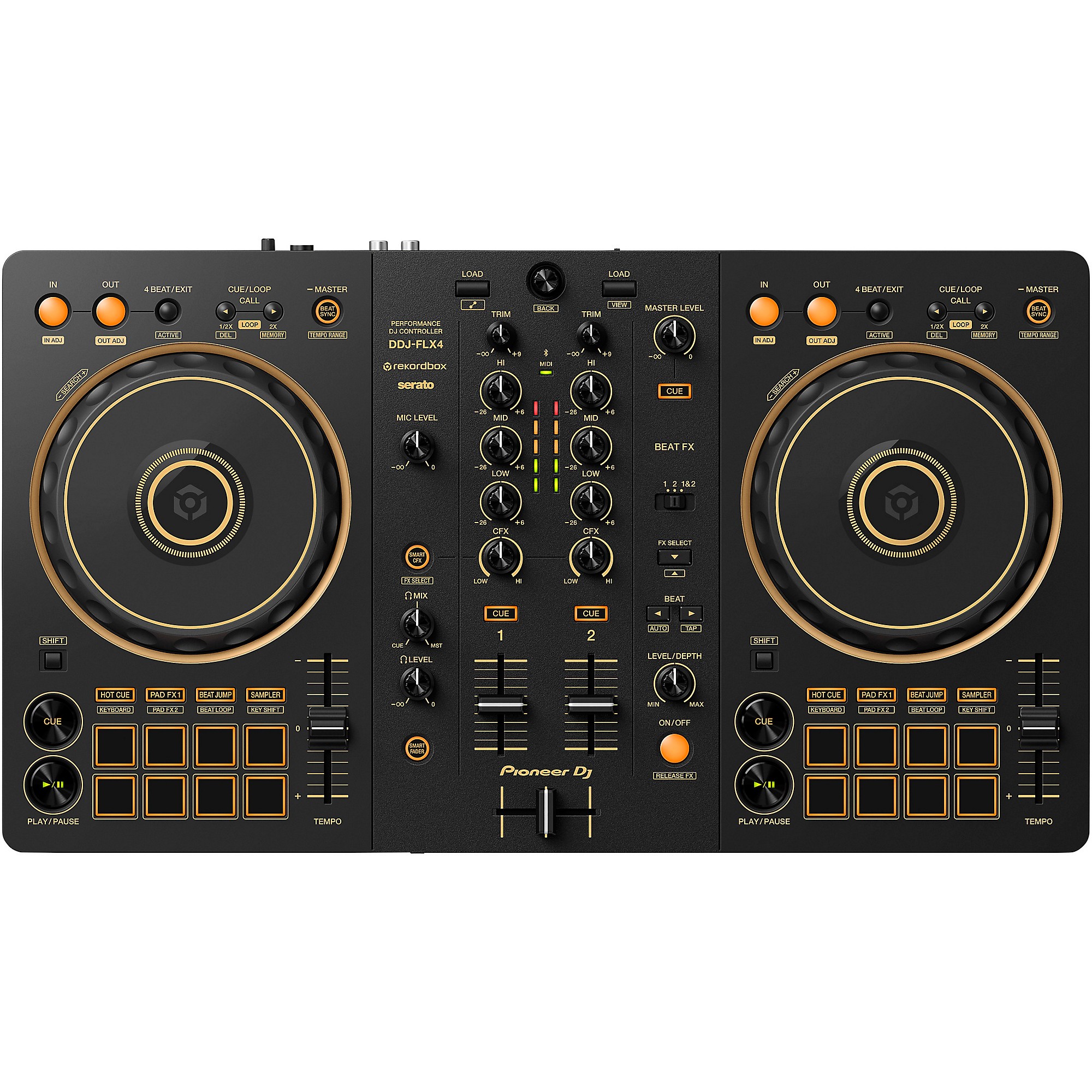
Pioneer DJ DDJ-FLX4 DJ Controller: beginner-friendly without feeling disposable
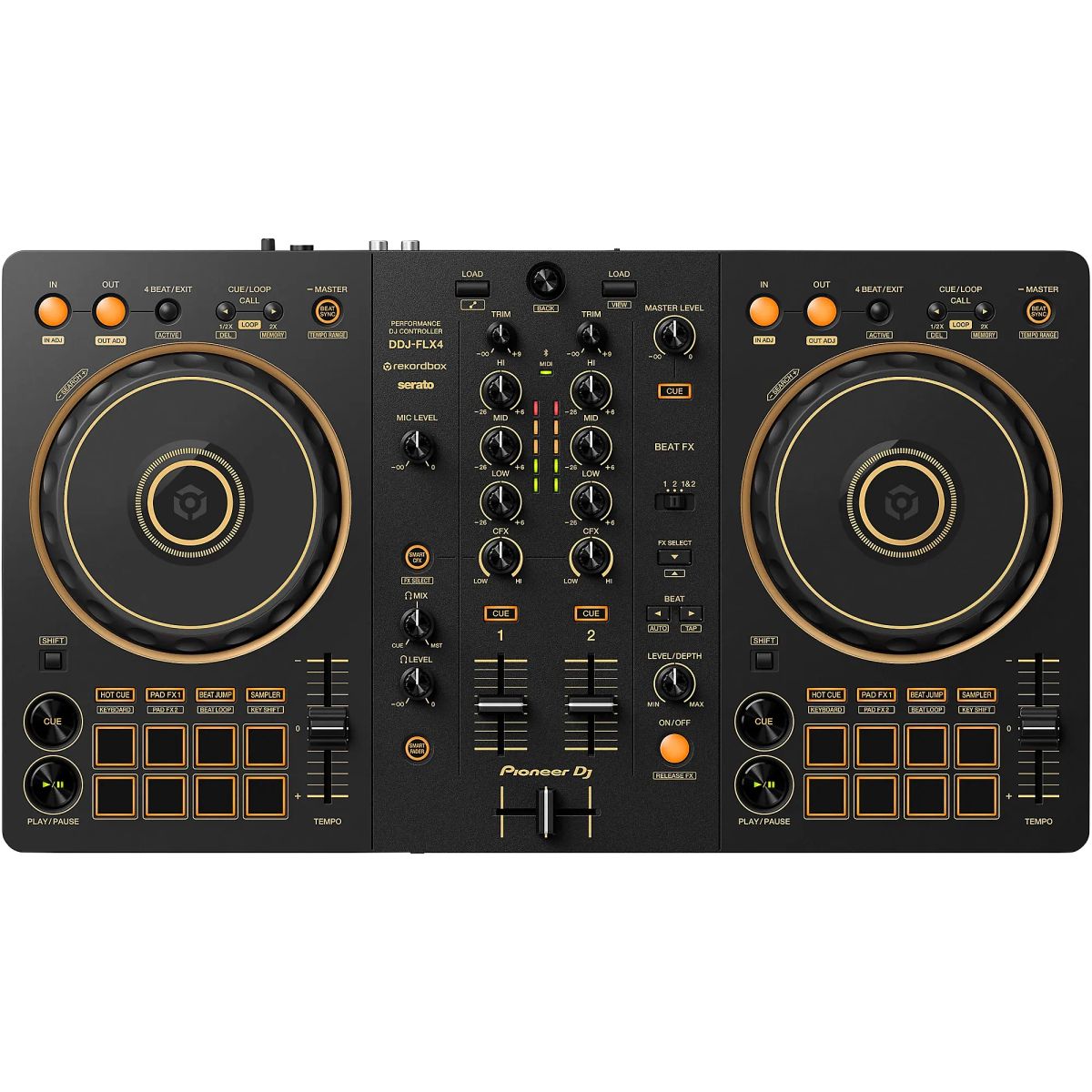
The Pioneer DJ DDJ-FLX4 DJ Controller is built for new DJs, casual users, and anyone who wants a compact Rekordbox controller that feels familiar without becoming intimidating. Its biggest strength is that it focuses on the fundamentals: cueing, phrasing, EQ work, transitions, and basic effects. The layout feels related to larger Pioneer DJ gear, so learning on it does not feel like time wasted. It is small enough to fit into normal life, affordable enough to justify as a first controller, and capable enough that you can use it well beyond your first month of practice.
- 2-channel layout with a clean and approachable design
- Useful for beginners, hobbyists, and home practice sessions
- Simplified club-style mixer section that teaches transferable habits
- Portable size that is easy to carry and store
- Good value for DJs still deciding how serious they want to get
Usage tip: If your main goal is bedroom mixing, learning song structure, and building confidence with Rekordbox, the FLX4 gives you enough room to grow without paying for advanced features you may not touch yet.
Pioneer DJ REV7: premium performance for scratch and open-format DJs
The Pioneer DJ REV7 is the most specialized and performance-driven unit in this comparison. It is aimed at DJs who care about platter feel, expressive routines, and a battle-style workflow that feels closer to using turntables. The motorized 7-inch platters are the headline feature for good reason; they change the physical relationship between your hands and the music. Add in the onboard jog displays, sturdy construction, and thoughtful control layout, and the REV7 starts to feel less like a convenience tool and more like an instrument designed for active performance.
- Motorized 7-inch platters designed to mimic vinyl feel
- Built-in 3.5-inch on-jog displays for essential track feedback
- Battle-style layout suited to scratch and open-format techniques
- Heavy-duty construction with a pro-level feel
- Excellent choice for DJs who want a tactile performance setup
Usage tip: If your sets involve quick cuts, hip-hop transitions, juggling, or routines where physical deck response matters, the REV7 is the one here most likely to feel inspiring instead of merely functional.
Pioneer NVII: compact, bright, and built for mobile convenience
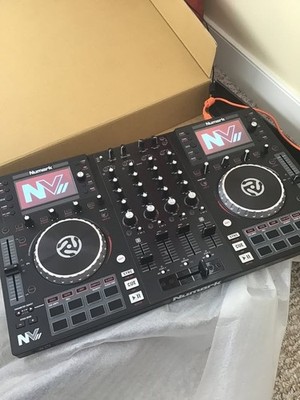
The Pioneer NVII occupies an appealing middle ground. It offers a portable format, bright onboard displays, and a workflow that makes sense for DJs who care about speed and convenience. It is not trying to out-muscle the REV7 in platter realism, and it is not as stripped back as the FLX4. Instead, it focuses on practical event-friendly benefits: clear visual feedback, visible performance controls, and a footprint that is easier to carry into venues. For many mobile and bar DJs, that kind of efficiency matters more than having the biggest platters in the room.
- Portable design that suits regular transport and mobile work
- Bright built-in displays that reduce laptop staring
- LED buttons that are easy to read in dark rooms
- User-friendly layout with solid sound and creative flexibility
- Strong option for DJs who want features without bulk
Usage tip: If you work weddings, private events, bars, or pop-up gigs where setup speed and portability matter almost as much as features, the NVII is likely to make more practical sense than a larger performance-first controller.

Which type of DJ fits each controller best?
If you are still unsure, it helps to stop asking which controller is “best” in the abstract and instead ask what your average use looks like. The FLX4 makes the most sense for learners and hobbyists who need a stress-free way to build foundational skills. The REV7 fits scratch DJs, open-format performers, and anyone who already knows that platter feel is a big deal. The NVII makes a strong case for mobile and event DJs who need to move fast, keep gear manageable, and still enjoy modern conveniences like onboard displays. Thinking about your normal Friday night is often more revealing than any spec sheet.
- Pioneer DJ DDJ-FLX4 DJ Controller: best for beginners, students, and backup practice use
- Pioneer DJ REV7: best for scratch DJs and performance-focused users
- Pioneer NVII: best for mobile DJs and compact event setups
- The FLX4 prioritizes affordability and learning comfort
- The REV7 and NVII prioritize different types of workflow efficiency
Usage tip: Before buying, picture where the controller will live, how often you will move it, and whether you mostly blend tracks, perform routines, or handle event work under time pressure.
Comparison vs. Alternatives — Rekordbox workflow choices
For Rekordbox users, the most useful comparison is not just price. It is the balance between learning curve, portability, feel, and long-term fit. The FLX4 covers the entry-level lane exceptionally well. The REV7 is a premium performance machine built for a more specific style. The NVII targets DJs who want visual feedback and mobility in one compact package. It also helps to look at nearby alternatives, because seeing the surrounding options often clarifies what each controller is really offering.
| Pioneer DJ DDJ-FLX4 DJ Controller | Pioneer DJ REV7 | Pioneer DDJ-400 | Denon DJ Prime Go |
|---|---|---|---|
| Best for new DJs learning core mixing skills | Best for scratch and open-format performance | Older beginner option with familiar basics | Portable all-in-one option with a different workflow |
| Compact and affordable | Motorized platters and on-jog displays | Simple layout but older platform position | Standalone convenience for travel and small gigs |
| Easy to recommend for home use and practice | Less ideal if you mainly do straightforward blending | Still usable, but the FLX4 feels more current | Higher price and a different category from standard controllers |
The Pioneer DJ DDJ-FLX4 DJ Controller is the clear value pick if you just need to learn, practice, and enjoy mixing without feeling overwhelmed. It is the easiest recommendation for a first controller because the compromise is obvious and acceptable: you are not buying a high-end performance unit. You are buying a strong foundation.
The Pioneer DJ REV7 is not really a “starter plus” unit. It is a purpose-built controller for DJs who know what they want from platter response, layout, and performance control. That makes it easier to justify for the right person and harder to justify for everyone else. If scratching is central to your style, it stands out. If not, it may be more machine than you need.
The Pioneer NVII is appealing because it solves everyday workflow problems. Bright screens, manageable size, and a practical control layout can matter more than headline features when you are loading in for events. In that sense, it competes less with the REV7’s dramatic feel and more with the question of how efficiently you can work.
As for alternatives, the Pioneer DDJ-400 remains a reference point for beginner-friendly design, but the FLX4 is the more modern recommendation for most buyers. The Denon DJ Prime Go represents a different idea entirely: a compact all-in-one route for DJs who prioritize mobility and less laptop dependence. It is not a direct substitute, but it is worth considering if convenience is your top priority.
Pros & Cons
Pioneer DJ DDJ-FLX4 DJ Controller
- Affordable path into Rekordbox-style DJing
- Beginner-friendly layout that encourages fast learning
- Very portable and easy to fit into small spaces
- Club-inspired workflow helps with future upgrades
- Limited for advanced performance techniques
- Not intended to replace a higher-end professional setup
- Less satisfying for DJs who want larger jogs or premium build
- Can feel basic once your needs become more specialized
Pioneer DJ REV7
- Excellent motorized platters with strong vinyl-like response
- Useful onboard displays reduce laptop dependence
- Battle-style layout favors expressive performance
- Robust build quality with a premium feel
- Larger and heavier than the other options here
- More specialized, which narrows its ideal audience
- Harder to justify if you mainly blend tracks simply
- Higher investment than a learner or casual user may need
Pioneer NVII
- Portable and event-friendly design
- Bright displays and visible controls help in dark venues
- Balanced feature set for practical gigging
- Good fit for mobile DJs who move gear often
- Smaller jog wheels are less appealing for scratch-heavy use
- Does not deliver the same tactile drama as the REV7
- Not as inexpensive or simple as the FLX4
- Best value depends heavily on your need for portability
Conclusion
If your problem is choice overload, here is the clean answer. The Pioneer DJ DDJ-FLX4 DJ Controller is the smart and simple option for learning, home use, and low-stress practice. The Pioneer DJ REV7 is the standout for performance DJs who want controller convenience without giving up a more vinyl-like feel. The Pioneer NVII is the practical middle ground for portability, onboard displays, and event-friendly efficiency.
Put even more simply: FLX4 for learning, REV7 for performing, NVII for moving fast. If you are a beginner, the FLX4 is usually the safest and most sensible buy. If scratching is central to your identity as a DJ, the REV7 earns its reputation. If your work involves carrying gear, setting up quickly, and handling varied gigs, the NVII may be the easiest one to live with. Pick the controller that matches your habits, space, and real-world needs, not the one that only wins on paper.
FAQs
Is the Pioneer DJ DDJ-FLX4 DJ Controller good for beginners?
Yes. The Pioneer DJ DDJ-FLX4 DJ Controller is one of the easiest recommendations for beginners because it is portable, straightforward, and focused on core DJ skills rather than advanced extras. It lets new users learn beatmatching, EQ use, phrasing, and transitions without feeling overloaded.
Will a beginner outgrow the FLX4 too quickly?
Not necessarily. Many beginners can use the FLX4 for a long time while improving their mixing fundamentals. You are more likely to outgrow it when you want deeper performance features, more channels, or a more premium tactile experience, not because it stops being useful for practice.
Is the Pioneer DJ REV7 worth it if I do not scratch much?
Maybe, but only if you still value its premium construction, layout, and overall feel. The REV7 is easiest to justify when motorized platters and battle-style workflow are central to your style. If you mainly do smooth blending and basic transitions, it may be more specialized than necessary.
What makes the Pioneer NVII stand out?
The Pioneer NVII stands out for portability, onboard displays, and an event-friendly workflow. It is especially attractive to DJs who want visual feedback and compact convenience without stepping all the way down to an entry-level unit.
Which controller here is most portable?
The Pioneer DJ DDJ-FLX4 DJ Controller is the easiest to carry and store, while the Pioneer NVII is also very portable for gig use. The Pioneer DJ REV7 is much less convenient to move regularly because it is larger and more performance focused.
Which one feels most like real vinyl?
The Pioneer DJ REV7. Its motorized 7-inch platters are the closest match here to the physical feel of turntables, which is why scratch DJs and open-format performers often gravitate toward it.
Can all three be used for home practice?
Yes. All three work for home practice, but they serve different goals. The FLX4 is the easiest learning tool, the REV7 is the best for advanced performance practice, and the NVII is ideal if you want a compact but capable controller that can move from home use to gigs smoothly.