Revolutionize Your Music Workflow: In-Depth flkey, Kawai MIDI Keyboard & Vortex Wireless Review for Future-Proof Production

Introduction
If your music setup feels like a pile of half-finished ideas, awkward mouse clicks, and repeated “why is this not mapped already?” moments, you are not alone. The modern controller market is packed with devices that promise to speed up production, improve feel, or make performance more exciting, yet many buyers still end up with gear that only partly fits how they actually work. That is why choosing the right controller matters so much. A good one does not just add features. It removes friction.
In this guide, we are looking at three controllers with very different strengths: the FLkey, the Kawai VPC-1, and the Alesis Vortex Wireless 2. They are not trying to solve the same problem, and that is exactly what makes the comparison useful. One is aimed squarely at FL Studio workflow, one is focused on realistic piano feel for software instruments, and one is designed for players who want mobility and stage presence.
That means this is not a shallow “which one wins” roundup. A producer building beats in FL Studio, a pianist practicing through virtual grands, and a live electronic performer moving around onstage should not be shopping with the same priorities. The best controller is the one that matches your daily bottleneck, not the one with the longest spec sheet.
Below, we will break down how each model fits into real-world use, where it shines, where it compromises, and how to decide which one makes sense for both your current setup and your next few years of music-making.
Key Features & Benefits
FLkey: Built for faster FL Studio workflow
The FLkey stands out because it is designed specifically around FL Studio rather than being a generic MIDI keyboard that happens to work with it. That difference is bigger than it sounds. Instead of spending hours assigning transport buttons, mixer controls, pads, and pattern functions, you get a controller that feels ready to participate in your workflow immediately. For beatmakers, loop builders, and producers who live inside FL Studio, that directness can turn a controller from a nice extra into something you use every session.
- Deep FL Studio integration out of the box
- Useful pads for drum programming and clip triggering
- Knobs and buttons that reduce mouse dependence
- Synth-action keys that suit modern production tasks
- Good fit for arranging, sequencing, and performance control
Usage tip: Set up your most-used mixer, plugin, and pattern functions first so the board starts building real muscle memory from day one.

Kawai VPC-1: When piano feel matters most
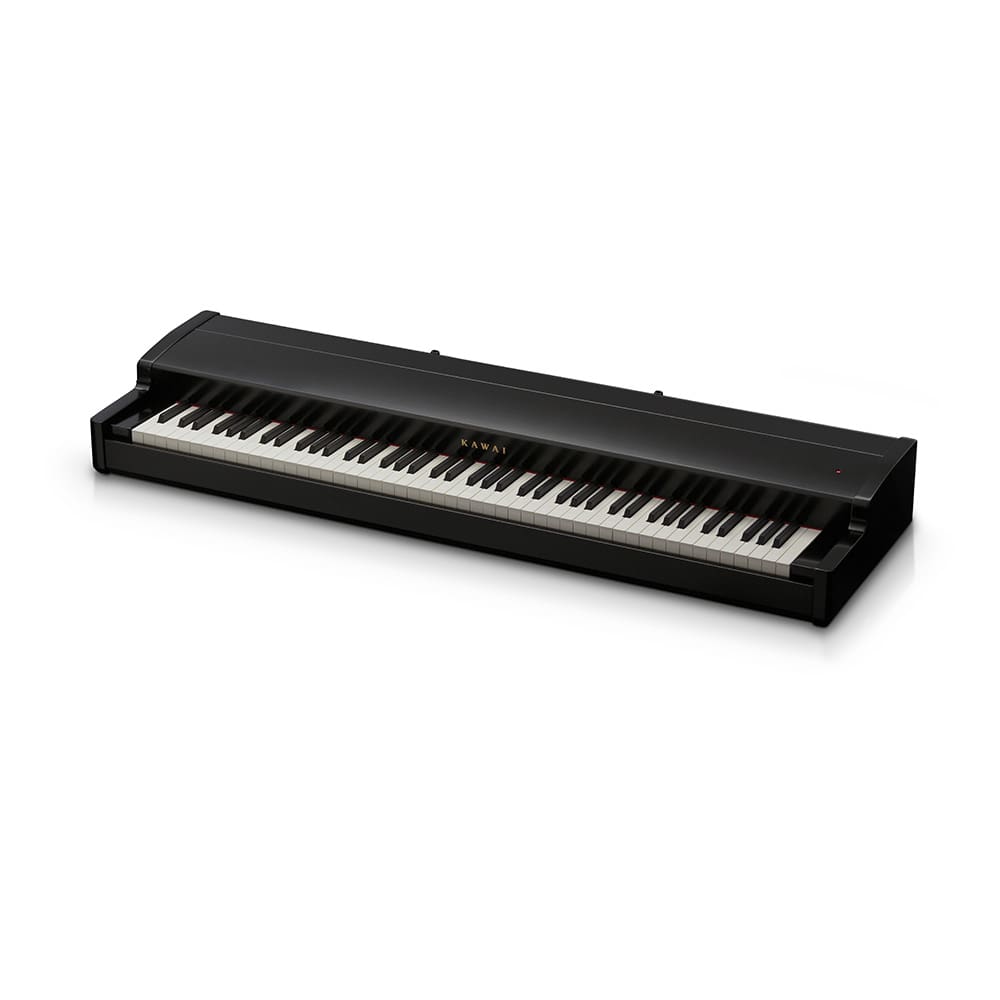
The Kawai VPC-1 is for players who care more about touch than extra controls. It is famous for one reason: the keyboard action feels impressively close to a real piano compared with most MIDI controllers. If you play expressive piano parts, work with high-end virtual piano libraries, or simply dislike the light and plasticky feel of many controller keybeds, the VPC-1 offers something rare. It does not try to be an all-in-one production hub. It focuses on feel, and that focus is why pianists respect it.
- Highly regarded hammer-action keybed
- Synthetic ivory surfaces for grip and tactile comfort
- Excellent dynamic response for expressive playing
- Designed specifically for software piano performance
- Strong reputation among serious pianists and composers
Usage tip: Pair it with your favorite piano library and spend time refining velocity settings so the action fully matches your playing style.
Alesis Vortex Wireless 2: Freedom for stage and mobile creators
The Alesis Vortex Wireless 2 serves a completely different musician. It is built for motion, performance, and convenience. If you play live, rehearse in changing spaces, or want to break away from the static keyboard-on-stand format, this controller solves a real problem. Wireless operation and a keytar-style design change not just what you can play, but how you can occupy a stage. For performers, that matters. Comfort, mobility, and confidence all affect the energy of a set.
- Wireless capability for freer live performance
- Wearable format that encourages movement
- Assignable controls for custom performance setups
- Good portability for rehearsals and gigs
- Visually engaging presence on stage
Usage tip: Save and test your show mappings in advance so your live set feels controlled instead of improvised in the wrong way.
Choosing by workflow instead of hype
The biggest benefit across these three controllers is not that one of them does everything. It is that each one clearly serves a different workflow. The FLkey helps producers move faster inside a specific DAW, the Kawai VPC-1 gives pianists a more authentic playing experience, and the Alesis Vortex Wireless 2 removes physical restrictions for performers. Buying according to workflow is what prevents regret. When you choose gear for the task you repeat most often, it keeps earning its place instead of becoming another expensive reminder that marketing and daily use are not the same thing.
- Better fit leads to more consistent use
- Specialized gear often beats broad compromise
- Workflow gains matter more than flashy extras
- Real tactile comfort changes how often you practice
- Good controller choices can remain useful for years
Usage tip: Before buying, list your three most common music tasks and choose the controller that removes the most friction from those exact tasks.
Comparison vs. Alternatives — workflow-focused controller options
These three models make the most sense when compared through the lens of use case rather than raw features. The FLkey competes with broader DAW controllers but wins when FL Studio is central to your routine. The Kawai VPC-1 faces other weighted controllers yet remains distinctive because of its piano-first design. The Alesis Vortex Wireless 2 overlaps with other keytars and performance boards, but its wireless convenience keeps it attractive for mobile live use.
| FLkey | Kawai VPC-1 | Arturia KeyLab Essential | Roland AX-Edge |
|---|---|---|---|
| Best for FL Studio users who want direct workflow control | Best for pianists using software instruments | Best for users needing wider DAW flexibility | Best for players wanting a more premium stage keytar |
| Strong integration, pads, knobs, and quick access functions | Exceptional piano action and expressive response | Versatile controls across multiple software environments | Strong stage image and performance-oriented design |
| Less compelling if you use many DAWs equally | Expensive and highly specialized | Less piano-realistic than the VPC-1 | Less desk-friendly for studio programming |
In practical terms, a producer making beats and arranging songs in FL Studio every day will usually get more immediate speed from the FLkey than from a general-purpose alternative. A pianist recording nuanced dynamics into software pianos will care far more about the Kawai VPC-1 than about pads, transport controls, or flashy screens. And a performer trying to energize a live set may prefer the Alesis Vortex Wireless 2 over a static keyboard even if the latter offers a more traditional playing position.
Alternatives are worth considering, but they do not erase these distinctions. A broad controller can be more flexible, yet sometimes flexibility is just another word for “you still have to set everything up yourself.” Specialized tools save time when their specialization matches your real work.

Pros & Cons
FLkey
- Excellent fit for FL Studio users
- Reduces tedious manual mapping
- Responsive pads and practical controls
- Comfortable for beat-making and sequencing
- Good value for DAW-focused producers
- Best benefits depend on using FL Studio regularly
- Synth-action feel will not satisfy weighted-key purists
- Less universal than some multi-DAW competitors
- Not the ideal single controller for piano-first players
- Workflow strengths are less impressive outside its target DAW
Kawai VPC-1
- Outstanding realistic piano action
- Very strong dynamic control for virtual pianos
- Tactile key surface improves long sessions
- Trusted by serious pianists and composers
- Future-proof for piano-centered work
- Premium price for a specialized controller
- Lacks the broad controls many producers expect
- Large and less convenient to move
- Not ideal for finger drumming or clip launching
- Can feel excessive if you only need casual keyboard input
Alesis Vortex Wireless 2
- Wireless freedom is genuinely useful on stage
- Encourages movement and performance energy
- Portable and easy to rehearse with
- Customizable controls support live setups
- Distinctive option for performers who want mobility
- Not intended for realistic piano technique
- Less natural for desk-based production work
- Some users may prefer a more rugged build feel
- Visual style may not appeal to every player
- Works best as a performance tool, not an only keyboard
Conclusion
The main takeaway is simple: these controllers are good for different reasons, and that is what makes the choice clearer. If your biggest frustration is slow FL Studio workflow, the FLkey is the obvious answer. If your biggest frustration is that most MIDI keyboards do not feel like a real instrument, the Kawai VPC-1 is the standout. If your biggest frustration is being physically locked to one spot while performing, the Alesis Vortex Wireless 2 solves that problem directly.
There is no universal winner because there is no universal workflow. Some musicians eventually combine two approaches, such as a DAW controller and a weighted piano board, or a studio keyboard plus a live performance controller. That often works better than forcing one device to cover every role badly.
Buy for the friction you face most often. The right controller should make music feel more immediate, more physical, and more enjoyable. When that happens, you notice the gear less and create more, which is exactly how good equipment should behave.
FAQs
Is the FLkey only worth buying if I use FL Studio?
Mostly yes. You can use the FLkey as a MIDI controller elsewhere, but its biggest value comes from FL Studio-specific integration. If FL Studio is your main environment, it makes strong sense. If not, a more general controller may be a better fit.
Why do pianists care so much about the Kawai VPC-1?
The Kawai VPC-1 is valued because its action feels much closer to a real piano than most MIDI controllers. For players using software pianos, that touch translates into better control, more expressive dynamics, and a more natural practice experience.
Is the Alesis Vortex Wireless 2 good for studio work?
It can be used in the studio, but that is not its strongest role. The Alesis Vortex Wireless 2 is best when mobility and live performance matter. For long desk-based production sessions, many players still prefer a traditional keyboard layout.
Can the Kawai VPC-1 replace a full production controller?
Not really. The Kawai VPC-1 excels at piano feel, but it is not designed as an all-purpose production hub. If you need pads, encoders, transport controls, and broad DAW integration, you may want a second controller alongside it.
Does the FLkey feel good enough for everyday playing?
Yes, for its intended purpose. The FLkey uses a synth-action approach that works well for programming, sketching chords, playing leads, and building tracks. It is not trying to imitate a concert piano, but it feels suitable for modern production tasks.
Is the Alesis Vortex Wireless 2 reliable enough for gigs?
For many performers, yes. It is widely used for light live work and rehearsals. As with any live gear, it is smart to test wireless setup, batteries, mappings, and connections before a show instead of trusting everything in the moment.
Which of these is best for beginners?
It depends on the beginner. A new FL Studio producer should probably start with the FLkey. A beginner focused on piano technique and software pianos may benefit more from the Kawai VPC-1 if the budget allows. A beginner preparing for stage performance may enjoy the Alesis Vortex Wireless 2 most.
Can one of these controllers be considered future-proof?
Yes, but only in relation to your workflow. The FLkey is future-proof if FL Studio remains your main DAW. The Kawai VPC-1 stays relevant as long as authentic piano feel matters to you. The Alesis Vortex Wireless 2 remains useful if live mobility continues to be part of your setup.