Ultimate Field Recorder Showdown: Zoom H5 vs. Tascam DR-40X vs. Roland R-07 – Capture Studio-Quality Sound on the Go
Introduction
Bad audio ruins good content faster than shaky video, a brilliant interview question, or the world’s best improvised guitar solo. If you’re trying to record clean sound on the go, this is one of those categories where a smart buying guide can save you money, frustration, and a lot of “why does this sound like it was recorded in a sock?” moments. A dedicated recorder will not magically fix poor mic placement or a noisy room, but it can give you better preamps, better controls, better monitoring, and more dependable files than a phone alone.
That is where portable recorders like the Zoom H5, Tascam DR-40X, and Roland R-07 enter the picture. All three aim to deliver a clear step up from casual mobile recording, yet they serve slightly different users. One leans into flexibility, one wins with value, and one focuses on compact convenience. If you are a filmmaker, journalist, podcaster, musician, teacher, or someone who simply wants reliable voice capture, these differences matter more than spec-sheet trivia.
In practical use, choosing the right recorder is mostly about workflow. Do you plug in external microphones often? Do you need XLR inputs? Do you mostly capture rehearsals, lectures, or ideas on the move? Do you want a device that can also pull desk duty as a USB interface? These questions shape the answer faster than any marketing slogan.
This comparison is designed to make the choice simpler. We will look at the strongest features of each recorder, the trade-offs that show up in real use, how they compare with a couple of common alternatives, and which model suits different recording habits best. None of these devices is universally perfect. Each one, however, can be exactly right for the right person.
Key Features & Benefits
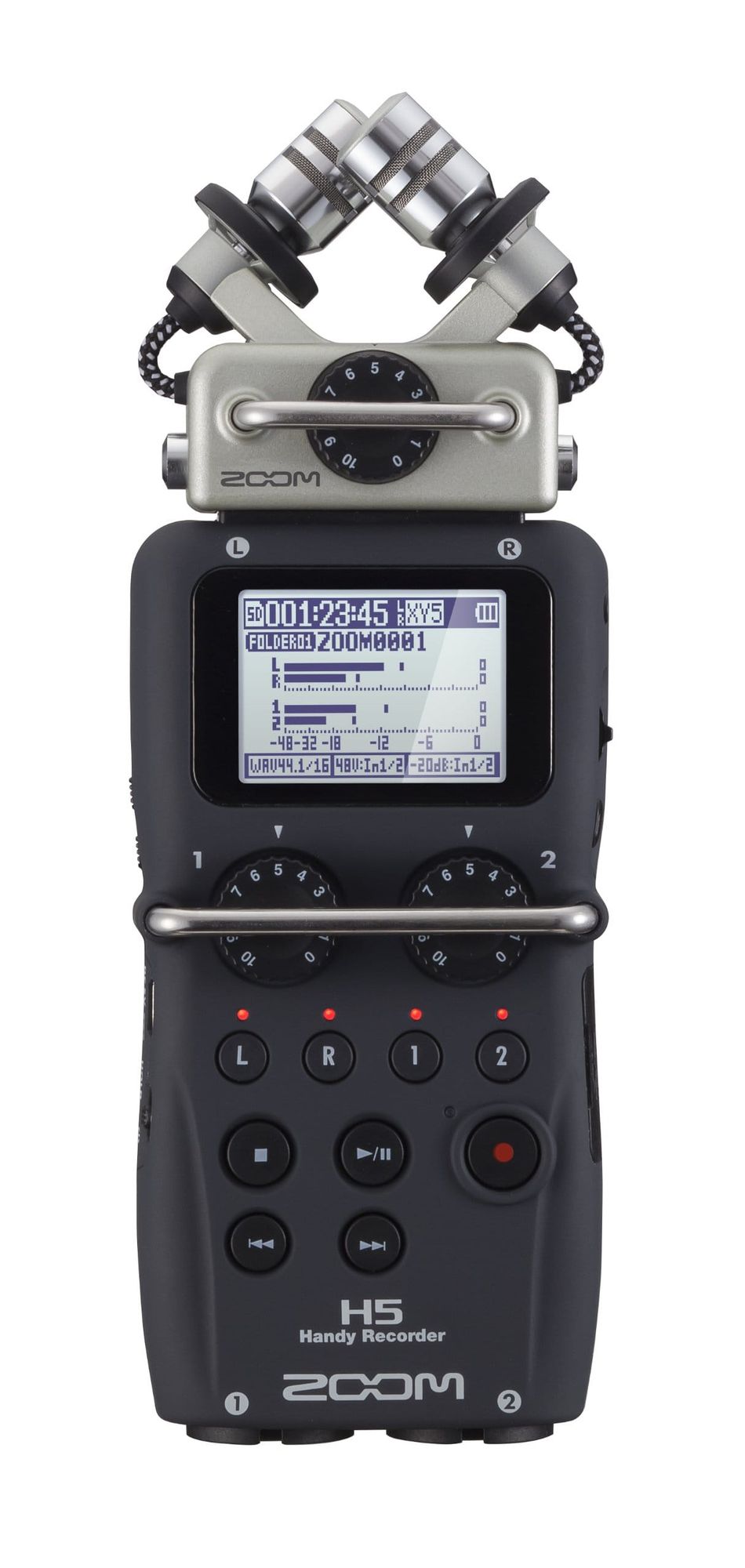
Zoom H5: flexible recording for creators who need room to grow
The Zoom H5 is the most expandable and production-friendly recorder of this group, which is why it stays popular with videographers, podcasters, journalists, and musicians. It can operate as a straightforward handheld recorder when you want speed, but it also adapts well to more serious setups involving external microphones, mixer feeds, or multi-source recording. That adaptability is the real appeal. If your projects vary from interviews one week to live music the next, the H5 rarely feels boxed in, and its physical controls make fast level changes easier than menu-heavy devices.
- Interchangeable microphone capsule system for different recording needs
- Two XLR/TRS combo inputs for external mics, instruments, or line sources
- Built-in stereo microphone module for quick ambient or handheld capture
- Multitrack recording support for more complex sessions
- USB audio interface function for desk-based voice or podcast work
Usage tip: If you shoot video, use the built-in mics for quick scratch audio or ambience, but switch to external XLR mics for interviews and dialogue where directionality and control matter more.

Tascam DR-40X: strong value and practical features for everyday recording
The Tascam DR-40X earns its reputation by offering a useful mix of features at a price that often feels easier to justify. It is especially attractive to creators who want more than a basic stereo recorder but do not necessarily need a modular system. Setup is generally straightforward, the core controls are approachable, and the feature set covers a wide range of common tasks such as interviews, music demos, room capture, podcasting, and voice recording. It feels less like a specialist tool and more like an all-rounder that solves everyday audio problems without much drama.
- Built-in adjustable stereo microphones for flexible onboard capture
- Two XLR/TRS combo inputs with phantom power support
- Four-track recording capability for more layered sessions
- Overdub function for music ideas, narration, or simple layering
- USB audio interface mode for computer-based recording
Usage tip: Before recording with condenser microphones, check phantom power and input settings first, then record a short test so you do not discover gain or power issues after the take is over.
Roland R-07: pocket-friendly simplicity with polished everyday performance
The Roland R-07 takes a more lifestyle-friendly approach to portable recording. Rather than chasing the biggest possible list of professional inputs, it prioritizes portability, clean operation, and dependable built-in recording. That makes it appealing for students, educators, songwriters, rehearsal capture, lectures, travel audio, and spontaneous note-taking. It is the recorder here that you are most likely to keep with you all the time, and that matters a lot. A recorder that is genuinely easy to carry often captures more useful material than a larger one left at home.
- Compact and lightweight design that fits easily into a small bag or pocket
- Built-in omnidirectional microphones in an AB configuration
- Well suited to rehearsals, lessons, lectures, and everyday ambient capture
- Simple controls for fast operation without much setup
- Comfortable carry-anywhere form factor that encourages frequent use
Usage tip: Because its built-in microphones are omnidirectional, move the recorder closer to the speaker or performer than you first think you need, especially in echoey or noisy rooms.

How these features translate into real-world benefits
Specs only become meaningful when they improve your actual recording day, and these three models do that in different ways. The Zoom H5 benefits people who switch between handheld recording and external mic setups. The Tascam DR-40X benefits buyers who want strong capability without paying extra for flexibility they may never use. The Roland R-07 benefits anyone who values speed, portability, and the ability to capture sound with minimal friction. In short, the right feature set is the one that removes obstacles from your own workflow rather than adding options you admire but never touch.
- Better manual level control than phone recording in many situations
- More dependable file capture for interviews, rehearsals, and field work
- Improved support for external microphones on the Zoom and Tascam models
- Greater portability and simplicity on the Roland model
- Useful crossover into desktop recording through USB interface modes
Usage tip: Whatever recorder you choose, always wear headphones during setup and record a quick sample first, because placement and gain matter more than brand loyalty.
Comparison vs. Alternatives — portable field recorder showdown
The quickest summary is this: the Zoom H5 is the most expandable, the Tascam DR-40X offers some of the best value in the category, and the Roland R-07 is the easiest to carry every day. To make that choice more concrete, it also helps to compare them with a couple of common alternatives that buyers often consider when trying to spend less or travel lighter.
| Zoom H5 | Tascam DR-40X | Zoom H1n | Sony ICD-style recorder |
|---|---|---|---|
| Best for flexible creator setups, interviews, video, and music | Best for value-focused users needing XLR inputs and everyday versatility | Best for simple stereo capture and travel-light kits | Best for lectures, meetings, and basic voice memos |
| Strong external mic support and multitrack usefulness | Practical balance of features, price, and ease of use | Small, affordable, and very approachable for beginners | Extremely simple carry-and-record workflow |
| Less pocketable than smaller recorders | Still larger than a true pocket recorder | Limited for advanced external mic workflows | Usually less suitable for production-oriented audio tasks |
Where does the Roland R-07 fit in this picture? It sits in an interesting middle ground. It is more polished and purpose-built for high-quality everyday handheld recording than many ultra-basic voice recorders, but it is less focused on XLR-based expansion than the Zoom H5 or Tascam DR-40X. That means it often wins for lectures, rehearsals, quick room sound, travel audio diaries, and idea capture, while the Zoom and Tascam units pull ahead when external microphones become central to the workflow.
If your recordings are mostly spoken word with a single onboard setup, even a simpler alternative may be enough. But if you regularly care about cleaner dialogue, music detail, manual control, or future-proofing, these three main models justify the step up. The decision is not just about quality. It is about how far you want the recorder to grow with you.
Pros & Cons
Zoom H5
- Excellent flexibility across video, podcast, interview, and music use
- XLR inputs make it friendly to external microphone workflows
- Physical controls are practical in fast-moving recording situations
- Expandable design helps it stay useful as your needs grow
- USB interface mode adds extra value for desktop recording
- Bulkier than true pocket recorders for daily carry
- Can feel like overkill for users who only need simple stereo capture
- More options mean slightly more setup learning at the start
Tascam DR-40X
- Strong feature-to-price ratio for creators on a budget
- Handles interviews, demos, voice, and location audio well
- Overdub function is genuinely useful for music and narration
- XLR/TRS inputs increase flexibility over basic handheld recorders
- Easy enough for newer users while still capable for regular work
- Not as modular or expandable in feel as the Zoom H5
- Still too large for people who want true pocket convenience
- Some buyers may never use enough of its features to justify the size

Roland R-07
- Very compact and easy to bring almost anywhere
- Built-in mics are convenient for frequent spontaneous recording
- Great fit for lectures, rehearsals, lessons, and travel audio
- Simple operation encourages actual use instead of shelf storage
- Comfortable design feels modern and practical in daily life
- Less suitable for XLR-based professional microphone setups
- Omnidirectional onboard mics can collect extra room noise
- Not ideal when you need more advanced multi-source recording flexibility
Conclusion
If your current recordings sound thin, noisy, inconsistent, or generally disappointing, a dedicated portable recorder can improve your results faster than many people expect. The Zoom H5, Tascam DR-40X, and Roland R-07 are all capable tools, but they succeed for different reasons. The H5 is the choice for users who want room to expand, connect better microphones, and move between several production styles without changing gear. The DR-40X is the practical all-rounder, especially for buyers who want strong features and sensible value. The R-07 is the recorder for people who prioritize portability, speed, and the simple fact that the best recorder is often the one you actually carry.
The smartest way to choose is to think about your most common recording situation, not the most ambitious one you imagine once a year. If you regularly record interviews, external mics probably matter. If you mostly capture lectures or ideas, portability matters more. If you want a device that bridges mobile and desktop recording, interface mode becomes more important. Matching the tool to the routine will usually lead to a better purchase than chasing the longest feature list.
Good audio is not about drama. It is about clean speech, usable ambience, dependable levels, and files you can trust when the moment is gone. Pick the recorder that fits how you work, and you will get more from it than from a technically superior model that does not suit your day-to-day habits.
FAQs
Is the Zoom H5 good for filmmaking and video production?
Yes. The Zoom H5 is a strong fit for video work because it supports external microphones, offers practical manual controls, and adapts well to interviews, location sound, and general run-and-gun production.
Is the Tascam DR-40X good for podcasting?
Yes. The Tascam DR-40X works well for podcasting, especially if you want XLR inputs, easy recording controls, and the option to use the recorder as a USB audio interface at a desk.
What is the Roland R-07 best used for?
The Roland R-07 is best for rehearsals, lectures, lessons, quick interviews, travel notes, and everyday ambient recording where portability and fast setup matter more than expandable inputs.
Which is better for external microphones: Zoom H5 or Roland R-07?
The Zoom H5 is better for external microphones because it includes XLR/TRS combo inputs and is built for more flexible production setups. The Roland R-07 is more focused on convenient built-in mic recording.
Does the Tascam DR-40X support overdubbing?
Yes. The Tascam DR-40X includes an overdub function, which is helpful for layering music ideas, adding narration, or building simple recordings without moving immediately to a computer.
Which recorder is the most portable?
The Roland R-07 is the most portable of the three. It is smaller and easier to carry daily than the Zoom H5 and Tascam DR-40X, which makes it especially appealing for spontaneous recording.
Which field recorder is best for beginners?
For many beginners, the Tascam DR-40X offers the best balance of features, value, and ease of use. If maximum simplicity and pocketability are the main goals, the Roland R-07 is also a very approachable choice.
Do I still need an external microphone with these recorders?
Not always. For rehearsals, room sound, lectures, and quick notes, the built-in microphones can be enough. For cleaner dialogue, controlled interviews, or more professional production work, an external microphone often gives much better results.